Loading
Operation: End ALS


ALS is disproportionately affecting our veterans
Our military serves with courage and sacrifice, facing dangers most can’t comprehend. But what if a threat exists with no protocol? What happens when the price of duty is too high? This is OPERATION: END ALS.
We created these figurines as a vehicle to spread the word about how ALS affects our veterans. They visualize symptoms of this disease and serve as a symbol of our collective strength and determination in raising funds to help end ALS.
ALS: amyotrophic lateral sclerosis.
ATTENTION / INTRODUCING:
Interact with the impact of ALS
Amyotrophic lateral sclerosis, or ALS, is a fatal neurodegenerative disease. It causes progressive degeneration of nerve cells in the spinal cord and brain. Click on the different parts of the figurine to hear from real veterans how ALS has impacted their lives.
Throat
Coughing may be the first sign of ALS
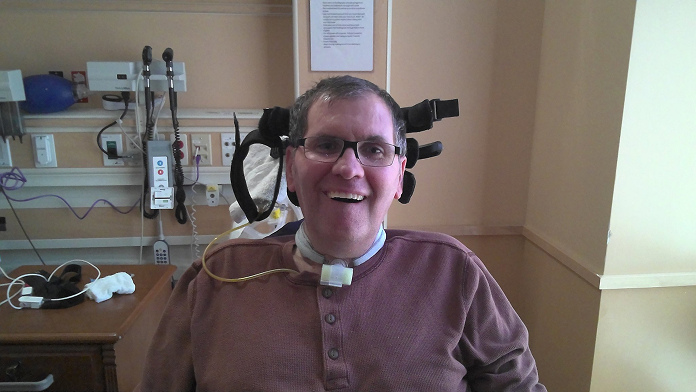
“Early February 2017, I started to have sinus drainage causing me to cough all the time and it wouldn’t go away so after many visits to my primary doctor I was finally referred to an ENT towards the end of March. After seeing an ENT for a couple of months due to my slurred speech and randomly choking, they referred me to a neurologist. I remember this day all too well.
The doctor said to have my family members present for the result on June 30th. There was no emotion, just a blank stare and all I could think about was why me and how did I get such a disease. June 30, 2017, I was officially diagnosed with Bulbar Onset ALS.”
—Garrett J. Smith, a US military veteran who bravely faced ALS and passed away in 2025
Muscles
Muscle fatigue may be the first sign of ALS
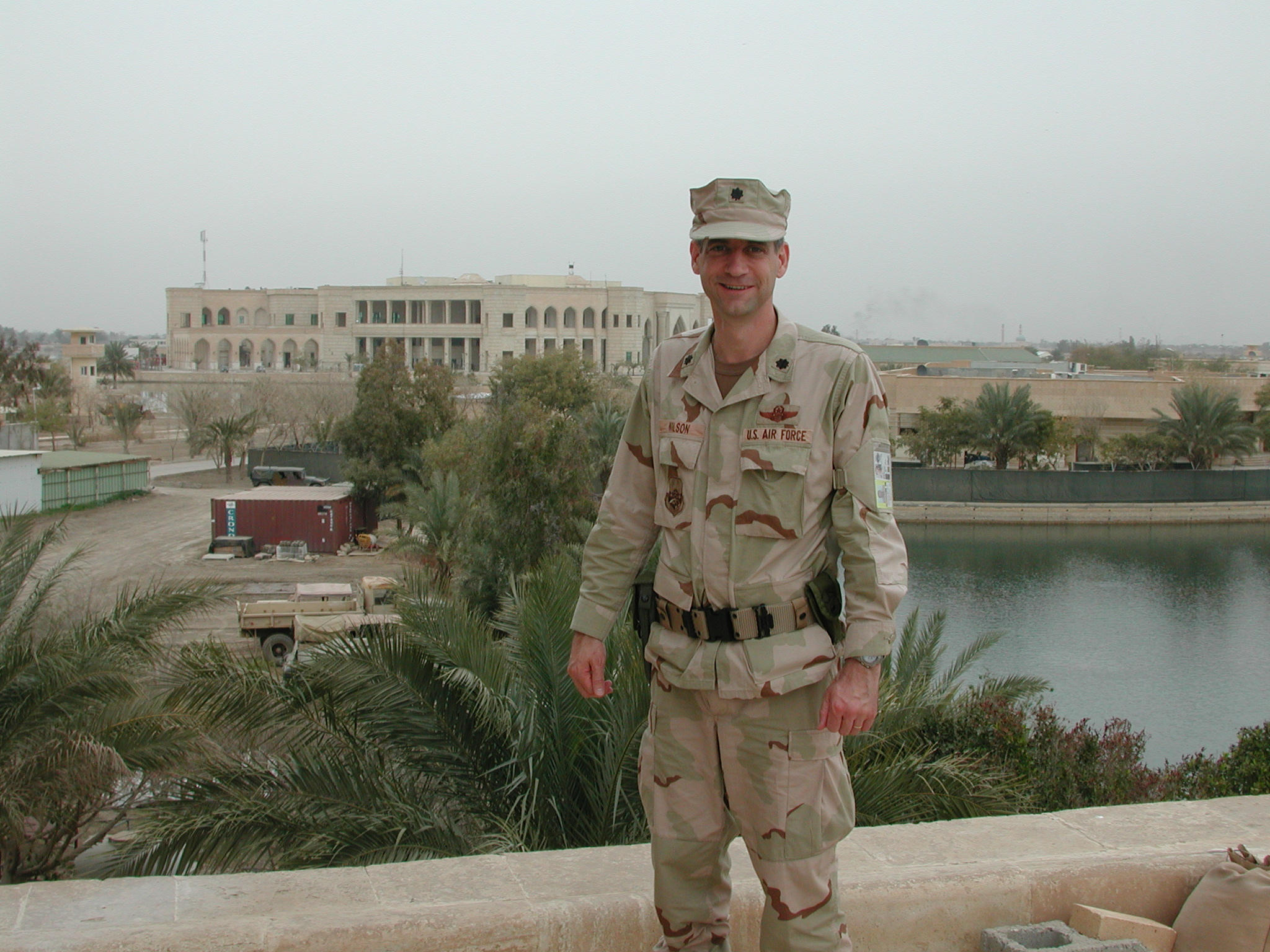
“Change happens. In March of 2023 while at the gym like every day, I was benching a moderate amount. After a few repetitions, I was having trouble fully extending my right arm. That continued for weeks so I went in to my family doctor who suspected tendonitis and recommended giving my arm some rest.
After completing all tests, the neurologist called me while my wife and I were enjoying a fine café at a favorite barista. He identified himself and said, ‘I have never seen it, but I think you have ALS.’ He referred me to an ALS clinic. My ALS diagnosis came on 4 Jan 2024.”
—Brian Wilson, a US military veteran living with ALS
Mobility
Loss of mobility may be the first sign of ALS
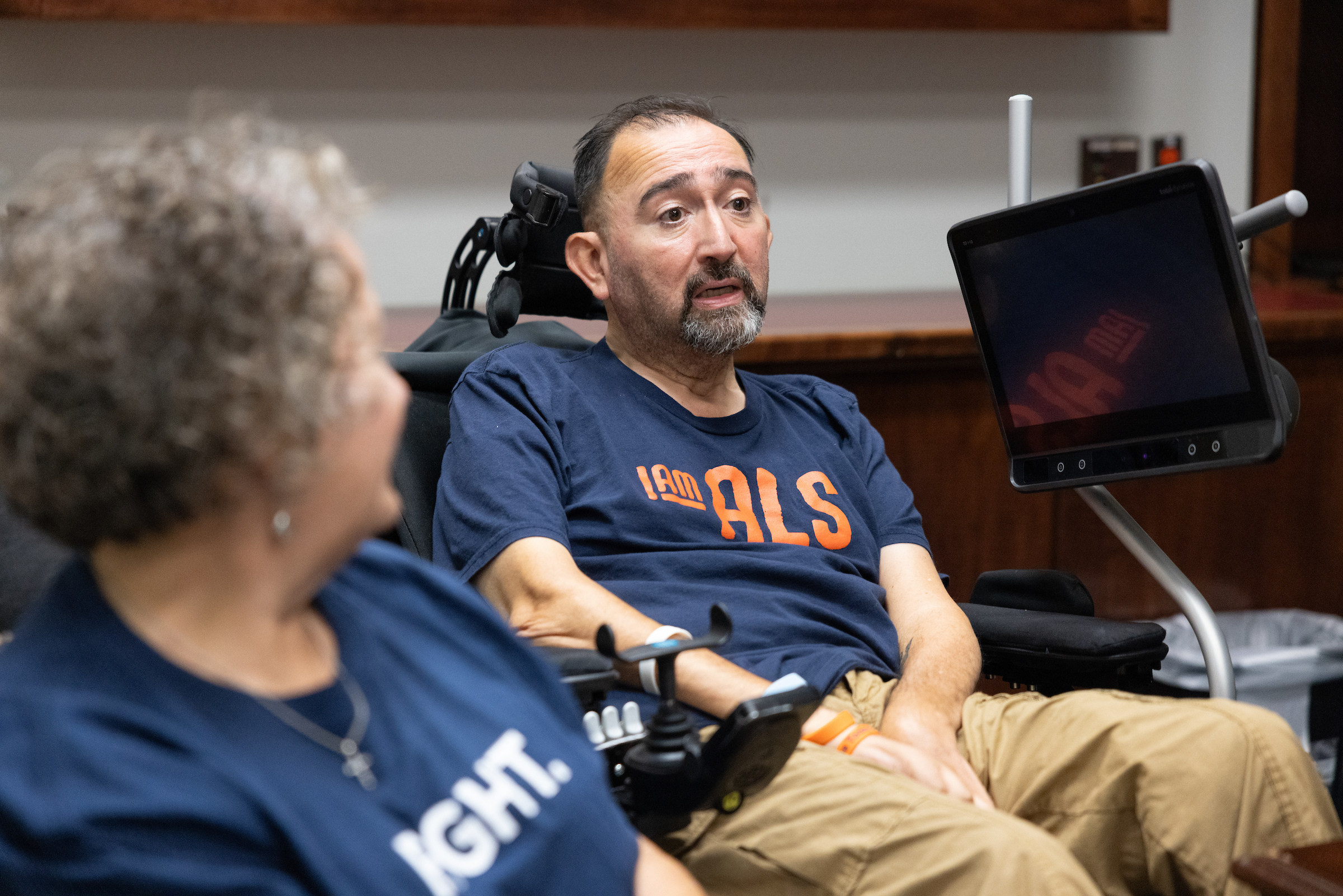
“The oddest observation came from the second neurologist. He pointed at my shoes and said, ‘Your shoe tips are all scuffed up.’ I hadn’t noticed this inane detail. It’s apparently due to foot drop, caused by the weakening of the ankles.
Since my diagnosis, I have deteriorated to the point of having to use a power chair; I am unable to bathe, dress or feed myself. ALS is an unrelenting, unforgiving disease. It takes everything from you, but it cannot take my spirit nor my will to fight.”
—Juan Reyes, a US military veteran living with ALS
Veterans are 2x
more likely
to develop ALS in comparison with those who have not served in the military.
“I signed on the dotted line to possibly give my life for our country. I could have never imaged that it would be like this.”
—Scott Whitmire, US military veteran living with ALS
“Although my fight for our nation is now over, my fight against ALS has just begun.”
—Roger Brannon, US military veteran living with ALS

living with ALS
with his wife, Meg

living with ALS

living with ALS

we've lost to ALS

living with ALS

living with ALS


Liz Fassler is an army veteran who served in the Middle East. Twenty years after her service, she was diagnosed with ALS and now advocates for others with the same condition.
20,895
veterans since 9/11 have been lost to ALS, more than the number of troops killed in combat in Iraq and Afghanistan combined (20,895 vs 6,896).
275,000
is the number of veterans with ALS who lived for 10 years after diagnosis—a noticeable missing population.
How can I help?
They stood watch for us. Now, as ALS threatens our nation's heroes, it's our turn to stand with them.